Introduction
In the world of carnivorous plants, Brocchinia reducta occupies a unique and extraordinary position. Often referred to as one of the few known carnivorous bromeliads, this species represents an exceptional example of evolutionary adaptation to nutrient-poor environments. Native to the mountainous regions of Venezuela, Guyana, and northern Brazil, Brocchinia reducta has developed sophisticated strategies to supplement its nutritional needs through the capture and digestion of insects.
For botany enthusiasts, collectors of rare plants, and researchers of evolutionary ecology, this species offers a fascinating glimpse into the convergent evolution of plant carnivory.
What is Brocchinia reducta?
Brocchinia reducta belongs to the Bromeliaceae family, the same as pineapples and air plants (Tillandsia), but it is deeply distinguished from its relatives by its nutritional behavior.
Botanical classification
Kingdom: Plantae
Order: Poales
Family: Bromeliaceae
Genus: Brocchinia
Species: Brocchinia reducta
Formally described in the 19th century, this plant grows primarily on tepuis, ancient rock formations of the Guiana Highlands characterized by extremely acidic, oligotrophic soils that are very poor in nitrogen.

Natural habitat and geographical distribution
Where does Brocchinia reducta grow?
The species is mainly found in:
- Venezuela (Gran Sabana)
- Guyana
- Northern Brazil
Ecological environment
It prefers:
- Altitudes between 500 and 2500 meters
- Very humid areas
- Strong solar radiation
- Sandy or rocky substrates with a scarcity of nutrients
The extreme conditions of the tepuis have favored the evolution of alternative mechanisms for mineral assimilation, including carnivory.
Carnivorous mechanism: how it captures prey
Unlike Dionaea or Drosera, Brocchinia reducta uses a passive pitfall trap similar, in some respects, to that of Nepenthes.
Trap structure
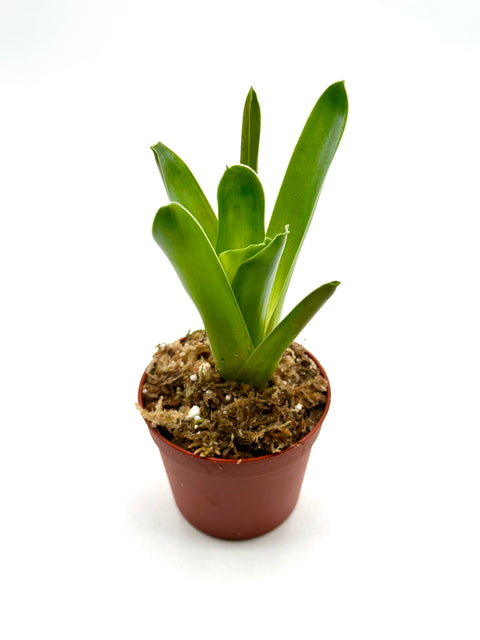
The leaves form a vertical tubular rosette that collects rainwater, creating a central cavity.
Attraction strategies
The plant utilizes:
- Bright yellow-green color
- UV reflections
- Production of slippery waxes
- Sugary secretions
Capture process
- Insects are attracted to the leaf surface.
- They lose their grip on the waxy walls.
- They fall into the internal liquid reservoir.
- They drown and are decomposed by bacteria and enzymes.
- The plant absorbs dissolved nitrogen and minerals.

Is it really a carnivorous plant?
The definition of plant carnivory generally requires:
- Attraction of prey
- Capture
- Digestion
- Nutrient absorption
Numerous ecological and physiological studies support the inclusion of Brocchinia reducta among protocarnivorous or fully carnivorous plants, although the scientific debate was heated for years.
Scientific evidence
Isotopic research has shown that a significant portion of the assimilated nitrogen derives from trapped insects.
- Extraordinary evolutionary adaptations
- Reduction of roots
- Since the soil offers very few nutrients, the root system is relatively limited compared to other bromeliads.
- Leaf specialization
The leaves have developed:
- Waxy cuticle
- Tubular morphology
- Water storage capacity
- Absorbent glands
- Microbial symbiosis
- The liquid present in the rosette hosts microbial communities that facilitate the decomposition of prey.
Cultivation of Brocchinia reducta
Difficulty level
- Easy to grow
Ideal parameters
Light
- Very intense
- Filtered sun or powerful artificial lighting
Temperature
- Day: 22-30°C
- Night: 15-22°C
Humidity
- 70-90%
Substrate
-
Acid peat
- Perlite
- Silica sand
- Live or dried sphagnum moss
Water
Use exclusively:
- Rainwater
- Demineralized water
- Reverse osmosis water
Nutrition
- Do not fertilize heavily.
Excess mineral salts can irreversibly damage the plant.
Common cultivation problems
Root rot
Caused by insufficient drainage.
Light deficiency
Produces weak growth and loss of coloration.
Conclusion
Brocchinia reducta represents one of the most fascinating expressions of extreme plant adaptation. More than just a botanical curiosity, it is living testimony to the evolutionary plasticity of plants.
For expert growers and researchers, owning or studying this species means coming into contact with one of the most sophisticated biological systems developed by the plant kingdom.
If you are passionate about rare carnivorous plants, Brocchinia reducta undoubtedly deserves a prominent place in your collection or studies.
FAQ about Brocchinia reducta
Is Brocchinia reducta truly carnivorous?
Yes, the majority of modern scientific evidence supports its ability to capture and assimilate nutrients from insects.
Is it difficult to grow?
It requires controlled conditions of high humidity, intense light, and pure water, making it better suited for experienced growers.
Where to buy Brocchinia reducta?
Only from nurseries specializing in carnivorous plants such as our shop, avoiding illegal collection.
What is its main peculiarity?
Being a bromeliad that has evolved carnivorous strategies within a botanical group where this is extremely rare.